
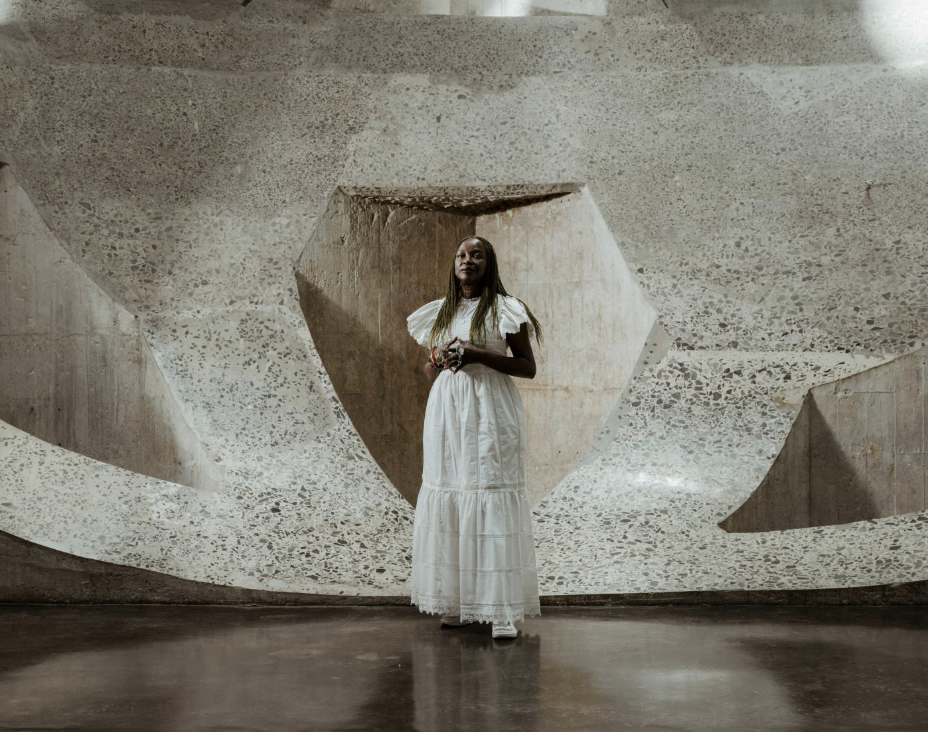
Koyo Kouoh
Born in Douala, Cameroon, and later educated in Switzerland and initially trained in business administration, she moved away from that path to immerse herself in cultural work, eventually relocating to Dakar in the 1990s. It was there that her curatorial language began to take shape. Dakar offered not just a context, but a way of thinking that was grounded in artistic experimentation, intellectual exchange, and a close relationship between art and everyday life.
Over the years, Kouoh has worked internationally, contributing to major exhibitions and biennials, while consistently challenging dominant narratives around African art. Her work insists on complexity and plurality, refusing reductive frameworks and instead foregrounding perspectives that emerge from within the continent and its diasporas. Even as her influence expanded globally, her focus remained on creating conditions for sustained intellectual and artistic growth.
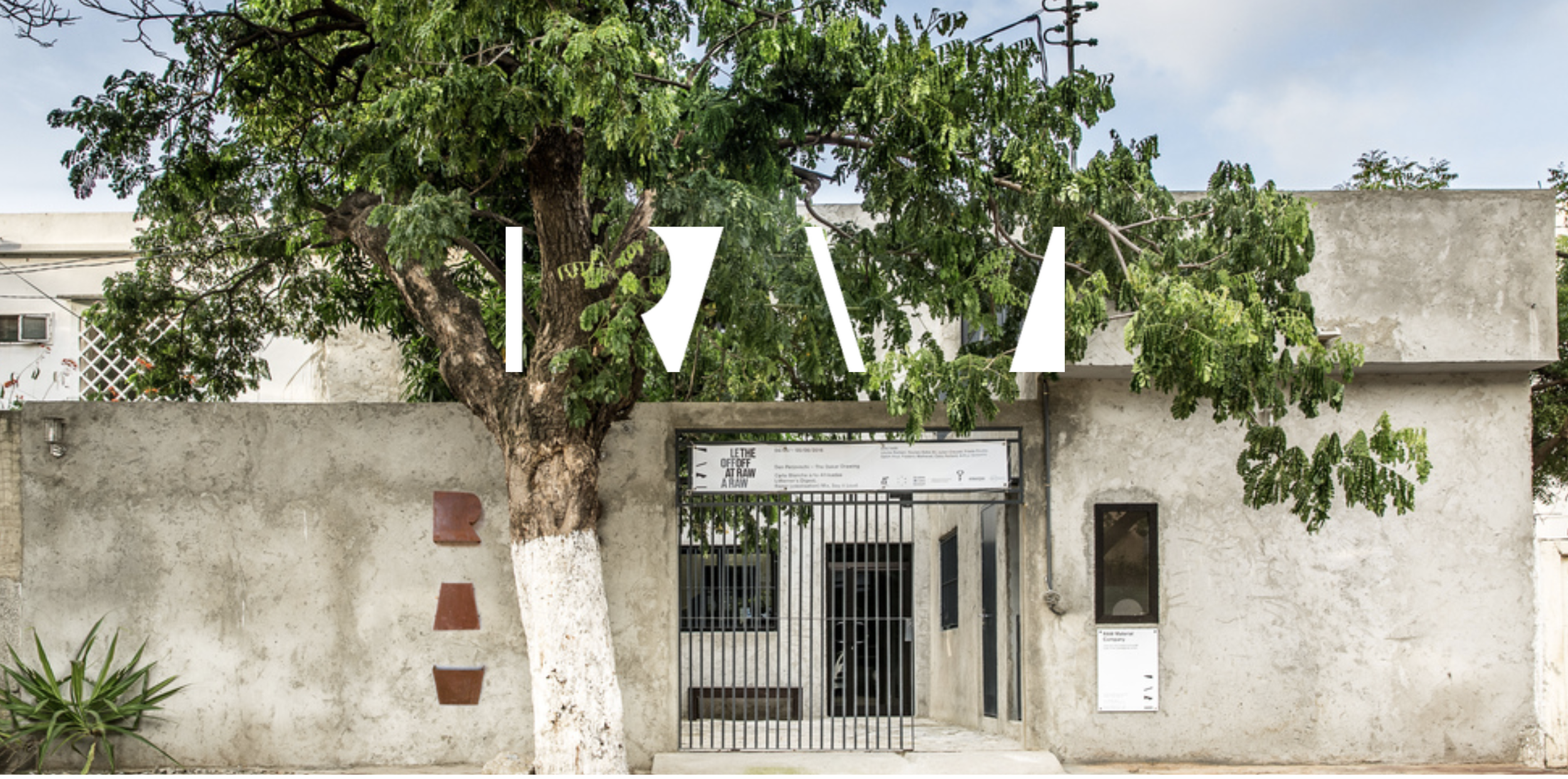
This commitment led to the founding of RAW Material Company in Dakar in 2008, an institution that embodies her vision of curating as a form of institution-building. Conceived as a space for art, knowledge, and society, RAW functions as a laboratory, a school, and a platform for exchange. It reflects Kouoh’s belief that cultural work requires continuity, that ideas need time, space, and collective effort to develop. Through RAW, she has fostered generations of artists, curators, and thinkers, creating an ecosystem where practice and theory are in constant dialogue.
In 2019, Kouoh took on the role of Executive Director and Chief Curator of the Zeitz Museum of Contemporary Art Africa in Cape Town, where she extended this vision on a larger institutional scale. There, she has worked to reimagine the museum as a space of public engagement, one that is rooted in its local context while remaining connected to global conversations. Her approach emphasizes accessibility, critical inquiry, and the importance of studying artistic practices in depth. She was appointed the curator of the 61st Art Biennale in Venice.
Across all these contexts, Kouoh’s work is guided by a consistent philosophy: art is not separate from life, but deeply embedded within it. She often described curating in terms of care and creation, bringing elements together, nurturing ideas, and allowing new forms to emerge. It is a practice that values process as much as outcome, and relationships as much as results. Koyo Kouoh’s influence continues to be felt not only through the institutions she has shaped, but through the ways of thinking she has cultivated. Her work lives on in the spaces that prioritize dialogue and knowledge, in the practices that center artists and their voices, and in the ongoing effort to imagine more expansive and grounded approaches to art.
Koyo Kouoh‘s legacy
It would be impossible to fully account here for the breadth, depth, and reach of Koyo Kouoh’s legacy. Her work cannot be reduced to a single list, timeline, or set of institutions. What follows are only a few key examples, highlighted to offer insight into the structures, conversations, and cultural shifts she helped shape over her lifetime.
Koyo Kouoh’s legacy is rooted in the institutions, conversations, and cultural infrastructures she built to reshape how African and diasporic artistic practices are thought, supported, and circulated.
Through Raw Material Company, founded in 2008 and established permanently in Dakar in 2011, she created a vital space for critical exchange, research, curatorial experimentation, and artistic production.
As a foundational contributor to 1-54 Contemporary African Art Fair, she developed and conceptualised its Forum programme from its inception in 2013, shaping it as a political, intellectual, and critical space that expanded conversations around African contemporary art beyond market structures.
Her work consistently insisted on building new structures rather than seeking validation from existing ones. As she stated, “You have to set up your own house and build your own home as opposed to trying to get into someone else’s castle.”
As Executive Director and Chief Curator of Zeitz MOCAA from 2019, she further expanded the global visibility and critical reach of African and diasporic contemporary practices.
Her landmark exhibition When We See Us: A Century of Black Figuration in Painting stands as a major contribution to Black figuration, self-representation, and historical positioning across generations and geographies.
Her appointment as curator of the 2026 Venice Biennale, In Minor Keys, further reflects the international scope and continued evolution of her practice.
Koyo Kouoh’s legacy is not only one of exhibitions, but of structures, conversations, and conditions that allow artists, curators, and cultural practitioners to think, build, and endure.
1-54 Contemporary African Art Fair
As a significant figure in the development of the 1-54 Contemporary African Art Fair from its launch in 2013, Koyo Kouoh developed and conceptualized the Forum program from the very beginning as a durational critical seminar dedicated to reflection, analysis, and conversation around contemporary African art. Between 2013 and 2017, she led eight editions of the Forum, including five in London and three in New York, establishing it as an essential intellectual and political space within the fair. Her contribution helped shape 1-54 beyond its commercial framework, positioning it as a platform where critical discourse, historical perspective, and access to African contemporary art could coexist. While 1-54 is not her creation, Koyo Kouoh’s intellectual and structural imprint remains part of its formative history, reflecting her belief that
“You have to set up your own house and build your own home as opposed to trying to get into someone else’s castle.”- Koyo Kouoh
Today, RAW Material Company remains one of the clearest expressions of Koyo Kouoh’s institutional, intellectual, and political legacy. As the foundational institution she built, RAW stands as a primary component of the Koyo Kouoh Foundation's broader mission and will remain a central site of continuity, care, and support. Supporting the Foundation, therefore also means directly contributing to the continued life, strength, and future of RAW Material Company, while allowing the Foundation to extend its support to wider artistic, curatorial, and cultural ecosystems aligned with Koyo Kouoh’s vision. In this way, RAW remains both a living legacy and a principal structural anchor through which the Foundation continues the work she began.
RAW MATERIAL COMPANY
AAs founding Artistic Director of RAW Material Company, Koyo Kouoh created and shaped a space that became central to her broader vision of art, knowledge production, and institutional imagination.
RAW Academy is not based on a fixed framework but rather an evolving one. It reflects a broader vision in which art is inseparable from knowledge production and where learning is understood as a collective, ongoing process. By creating a space where theory and practice meet, where local and global perspectives intersect, and where continuity is prioritized over fragmentation, RAW has established itself as a critical site for thinking through contemporary art today.
Conceived as a space for learning outside of formal academic structures, the Academy creates opportunities for artists, curators, writers, and researchers to engage deeply with ideas and with each other. It operates through seminars, workshops, residencies, and publications, fostering an environment where critical thinking is central and where knowledge is continuously generated and shared.
““You have to set up your own house and build your own home as opposed to trying to get into someone else’s castle.” ”
PARTCOURS DAKAR
As the co-founder of PARTCOURS alongside Mauro Petroni in 2012, Koyo Kouoh helped shape Dakar’s annual citywide contemporary art festival as a collaborative artistic itinerary connecting galleries, institutions, foundations, and independent spaces across the city. Together, they established PARTCOURS as a platform designed to highlight the richness of Dakar’s contemporary art scene while fostering structural collaboration, public engagement, and exchange across local and international artistic communities. By federating more than thirty artistic organisations, PARTCOURS became a key cultural moment in Dakar and a strong reflection of Koyo Kouoh’s broader commitment to building sustainable artistic infrastructures.
ZEIT MOCAA
As Executive Director and Chief Curator of Zeitz Museum of Contemporary Art Africa (Zeitz MOCAA) from 2019, Koyo Kouoh played a significant role in expanding the museum’s global reach, critical relevance, and institutional visibility, further establishing it as one of the leading international platforms for African and African-descendentt artistic practices. Her curatorial direction centered in-depth solo exhibitions dedicated to artists including Otobong Nkanga, Johannes Phokela, Senzeni Marasela, Abdoulaye Konaté, Tracey Rose, and Mary Evans, while positioning Zeitz MOCAA as a site of rigorous research, historical engagement, and contemporary discourse.
As the head of Zeitz MOCAA, she put together major exhibitiosbig shows such aslike Tracey Rose: Shooting Down Babylon and When We See Us: A Century of Black Figuration in Painting. The lattersecond show was a landmark event that brought Black figuration back to the center of attention across generations and geographies, and it greatly increased the museum's international recognition and cultural impact.
Furthermore Kouoh also had a long career in publishing that helped shape the way people talk about modern art. Some of her works include When We See Us: A Century of Black Figuration in Painting (2022), Shooting Down Babylon (2022), Breathing Out of School: RAW Académie (2021), Condition Report on Art History in Africa (2020), and Word! Word? Word! Issa Samb and The Undecipherable Form (2013), and Condition Report on Building Art Institutions in Africa (2012).
Through her institutional leadership, curatorial practice, and publishing work, Koyo Kouoh’s legacy at Zeitz MOCAA extends beyond exhibitions to her transformative role in strengthening the museum’s position as a globally recognized institution that shapes how African and diasporic art is researched, exhibited, and understood worldwide.
WHEN WE SEE: US A CENTURY OF BLACK FIGURATION IN PAINTING
- Curated by Koyo Kouoh and Tandazani Dhlakama.
When We See Us: A Century of Black Figuration in Painting, curated by Koyo Kouoh, is one of the clearest and most powerful examples of her work.
This show, which first opened at Zeitz MOCAA in Cape Town, brought together something truly amazing: a century of Black figuration from all over the world, across generations and histories, on a scale never seen before. The research's depth, the vision's ambition, and the number of artists involved made it a truly unique project.
When We See Us was not just a major exhibitionbig show for Koyo Kouoh; it was also a big success. Through painting, she made room for a wide, layered, and deeply human reading of Black life by putting self-representation, memory, beauty, intimacy, presence, and complexity at the center of her work.
For many people, it was a major historical change. Very few shows have tried to collect and reframe a hundred years of Black figuration on this scale with such intellectual care and emotional depth.
As the exhibition traveled internationally beyond Cape Town to Basel, Brussels, and Stockholm, it became a living reflection of Koyo Kouoh’s rare ability to build work that could move across borders while remaining deeply grounded
When We See Us is a one-of-a-kind curatorial achievement in her legacy. It made a huge difference in how Black artistic histories arecan be seen, understood, and remembered in global cultural memory.
Koyo Kouohs Biography
2007
Served in the curatorial team for documenta 12
2012
Served in the curatorial team for documenta 13
Co-founded PARTCOURS in Dakar alongside Mauro Petroni, helping establish a citywide annual contemporary art platform connecting galleries, institutions, foundations, and independent spaces.
Published Condition Report on Building Art Institutions in Africa, a collection of essays resulting from the symposium held in Dakar in January 2012.
Published Chronicle of a Revolt: Photographs of a Season of Protest (RAW Material Company & Haus der Kulturen der Welt, 2012).
2013
Published the monograph; Word! Word? Word! by Issa Samb and the undecipherable form (RAW Material Company/OCA/Sternberg Press, 2013), the first monograph dedicated to the work of the Senegalese artist.
Became curator of 1:54 FORUM, the educational program at the Contemporary African Art Fair in London and New York.
2016
Curated Still (the) Barbarians, the 37th EVA International, Ireland’s Biennial in Limerick
2013–2017
Led eight consecutive editions of 1:54 FORUM across London and New York, shaping it as a major critical and intellectual platform within the fair.
2018
Participated in Carnegie International, 57th edition, with Dig Where You Stand, an exhibition within the exhibition based on the Carnegie Museum of Art’s collection.
Co-curated with Rasha Salti Saving Bruce Lee: African and Arab Cinema in the Era of Soviet Cultural Diplomacy at Haus der Kulturen der Welt in Berlin.
2020
Received the Grand Prix Meret Oppenheim Art Award for her contributions to international discussions on art from an African perspective.
Founding Practice
Koyo Kouoh is the founder and the initial artistic director of RAW Material Company.
Alongside RAW Material Company’s sustained theoretical, exhibition, and residency program, she maintained critical curatorial and advisory activity internationally, regularly participating in juries and selection committees.
She lived and worked between Dakar and Basel.
Recent Practice
More recently, her curatorial work expanded through When We See Us: A Century of Black Figuration in Painting, first presented at Zeitz MOCAA.
2026
Appointed curator of the Venice Biennale, curated the 61st Biennale, In Minor Keys.
Koyo Kouoh is one of the most influential curatorial voices of her generation, shaping the way contemporary African art is thought, produced, and experienced across the world. Her practice extended beyond exhibition-making. It was rooted in a deep commitment to artists, to knowledge production, and to building structures that allow both to thrive. Through her work, curating becomes not only a way of presenting art, but a way of engaging with society, of creating spaces where ideas can be exchanged, challenged, and sustained.
Born in Douala, Cameroon, and later educated in Switzerland and initially trained in business administration, she moved away from that path to immerse herself in cultural work, eventually relocating to Dakar in the 1990s. It was there that her curatorial language began to take shape. Dakar offered not just a context, but a way of thinking that was grounded in artistic experimentation, intellectual exchange, and a close relationship between art and everyday life.
Her encounter with artists such as Issa Samb and the wider community around the Laboratoire Agit’Art was particularly formative. Within this environment, art was not confined to objects or institutions, but understood as a living, critical practice. One that engaged directly with social, political, and philosophical questions. This experience deeply informed Kouoh’s approach, leading her to develop a curatorial practice rooted in proximity, dialogue, and long-term engagement with artists. For her, artists are not simply contributors to exhibitions rather they are the foundation upon which cultural work is built.
Over the years, Kouoh has worked internationally, contributing to major exhibitions and biennials, while consistently challenging dominant narratives around African art. Her work insists on complexity and plurality, refusing reductive frameworks and instead foregrounding perspectives that emerge from within the continent and its diasporas. Even as her influence expanded globally, her focus remained on creating conditions for sustained intellectual and artistic growth.
This commitment led to the founding of RAW Material Company in Dakar in 2008, an institution that embodies her vision of curating as a form of institution-building. Conceived as a space for art, knowledge, and society, RAW functions as a laboratory, a school, and a platform for exchange. It reflects Kouoh’s belief that cultural work requires continuity, that ideas need time, space, and collective effort to develop. Through RAW, she has fostered generations of artists, curators, and thinkers, creating an ecosystem where practice and theory are in constant dialogue. In 2019, Kouoh took on the role of Executive Director and Chief Curator of the Zeitz Museum of Contemporary Art Africa in Cape Town, where she extended this vision on a larger institutional scale. There, she has worked to reimagine the museum as a space of public engagement, one that is rooted in its local context while remaining connected to global conversations. Her approach emphasizes accessibility, critical inquiry, and the importance of studying artistic practices in depth. She was appointed the curator of the 61st Art Biennale in Venice.
Across all these contexts, Kouoh’s work is guided by a consistent philosophy: art is not separate from life, but deeply embedded within it. She often described curating in terms of care and creation, bringing elements together, nurturing ideas, and allowing new forms to emerge. It is a practice that values process as much as outcome, and relationships as much as results. Koyo Kouoh’s influence continues to be felt not only through the institutions she has shaped, but through the ways of thinking she has cultivated. Her work lives on in the spaces that prioritize dialogue and knowledge, in the practices that center artists and their voices, and in the ongoing effort to imagine more expansive and grounded approaches to art.